
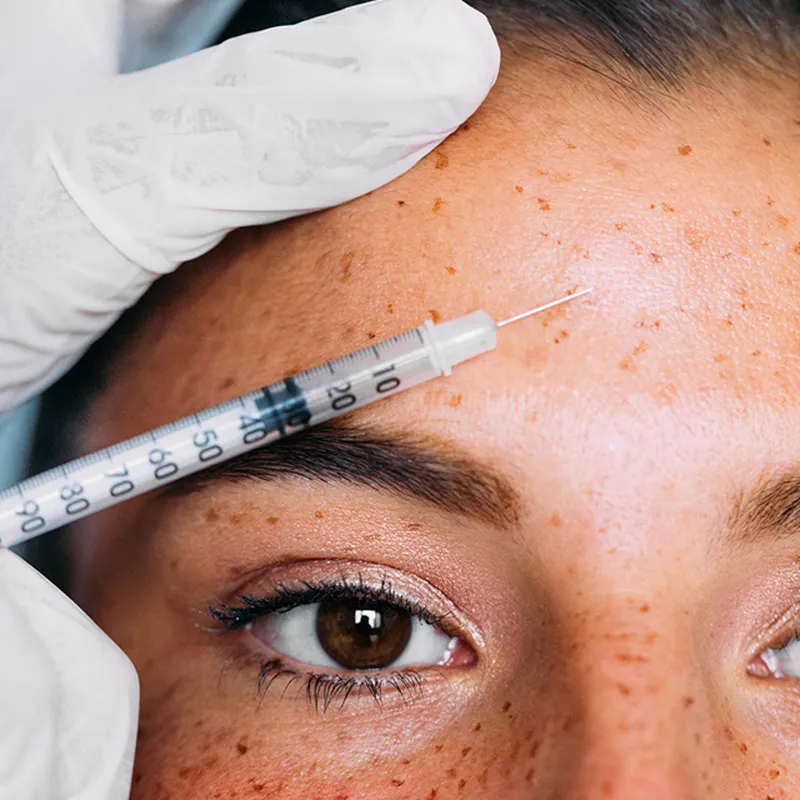
Some people believe Botox “prevents wrinkles, so it must build collagen.” The reality is more nuanced. Botox is one of the most common aesthetic treatments for reducing wrinkles. It works well for softening expression lines, but there’s a common misconception that Botox stimulates collagen production. It doesn’t. Understanding what Botox does and what it does not do is essential if your goal is long-term skin health and slower aging.
What Botox Actually Does
Botox (botulinum toxin type A) works by temporarily blocking nerve signals to specific facial muscles. This reduces muscle contraction, which softens dynamic wrinkles such as:
When the muscle relaxes, the overlying skin appears smoother.
That’s it.
Botox affects the muscle activity under the skin, not collagen production.
What Actually Builds Collagen
Collagen is produced by fibroblasts in the dermis. Collagen production is stimulated by:
Botox does not directly stimulate fibroblasts or increase collagen synthesis. Find out exactly how to turn your body into a collagen-building machine
The Long-Term Skin Aging
Collagen loss is one of the main drivers of visible aging. After age 30, we lose approximately 1% of collagen per year. Simply relaxing muscles does not reverse that decline.
If your goal is:
You need strategies that actively stimulate collagen production, not just temporarily relax movement.
The L.A.B. Perspective
Inside the L.A.B., we don’t frame Botox as good or bad. We frame it accurately.
Botox can reduce the appearance of dynamic wrinkles.
It does not rebuild the skin’s structural foundation.
If you want to truly slow visible aging, you must support:
That’s how you use L.A.B to build skin that ages slower not just skin that looks smoother for a few months.
We are here to support you on your anti-aging journey.
Got questions about the L.A.B. Method, products, or consultations?